Client
Landesmuseum für Kärnten
Location
Loiblpass, Karyntia, Austria
Area
Team
Łukasz Gąska
Mirosław Wojcieszak
Kornel Kuzański
Marta Sowińska-Gąska
Teresa Bączkiewicz
Kasia Woźniak
Status
Closed competition (by invitation), concept
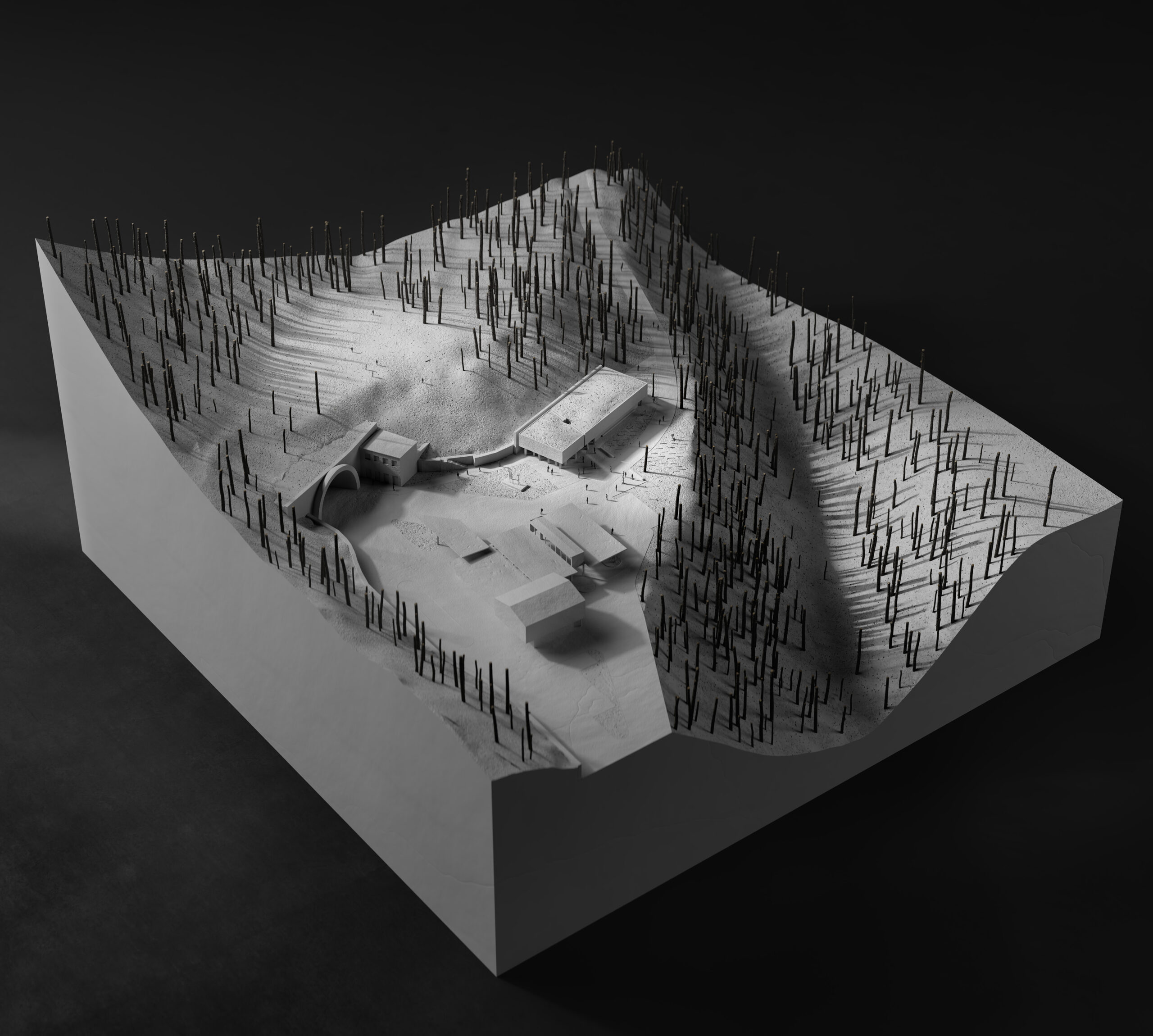
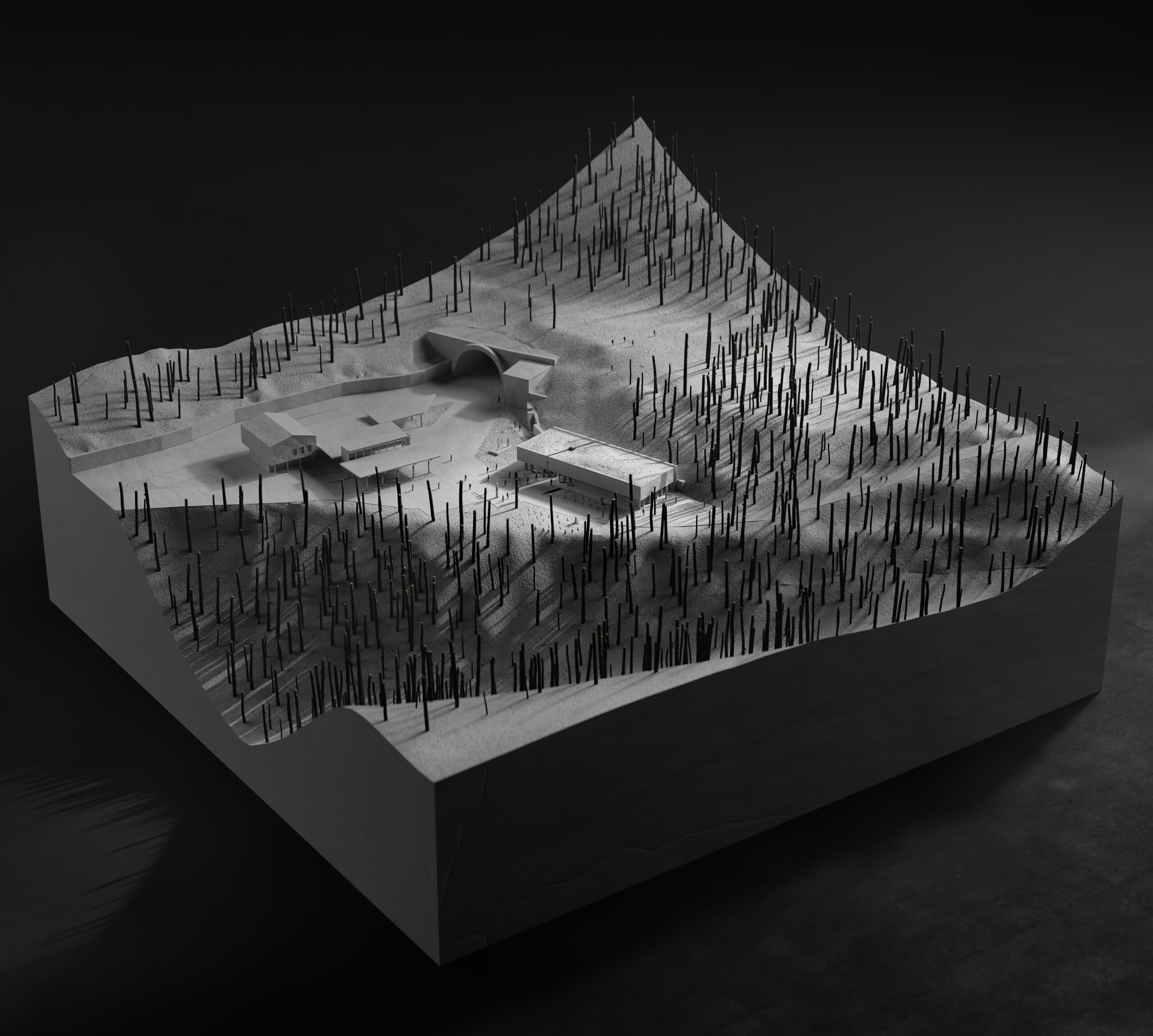
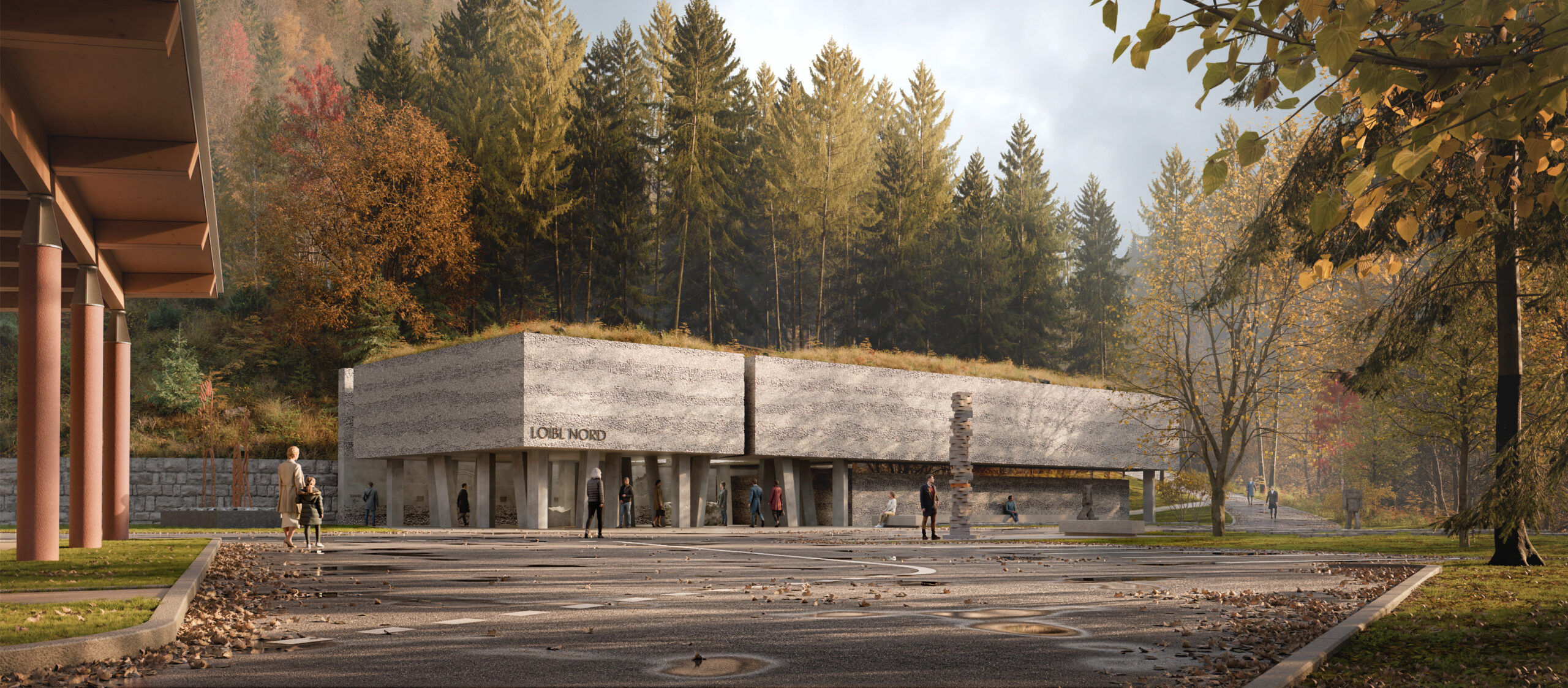
The project is located at the northern portal of the Loibl Tunnel, a site saturated with the tragic history of forced labor and the memory of the KL Mauthausen subcamp. Situated at the junction of the modern road linking Austria and Slovenia and the historic camp grounds, the structure aims to organize the surrounding chaos and create a logical emotional continuity in narrating the fates of the prisoners who excavated the mountain tunnel. Architecture here becomes a crystallization of the memory of forty documented victims, whose fate has been symbolically immortalized within the very structure of the building.
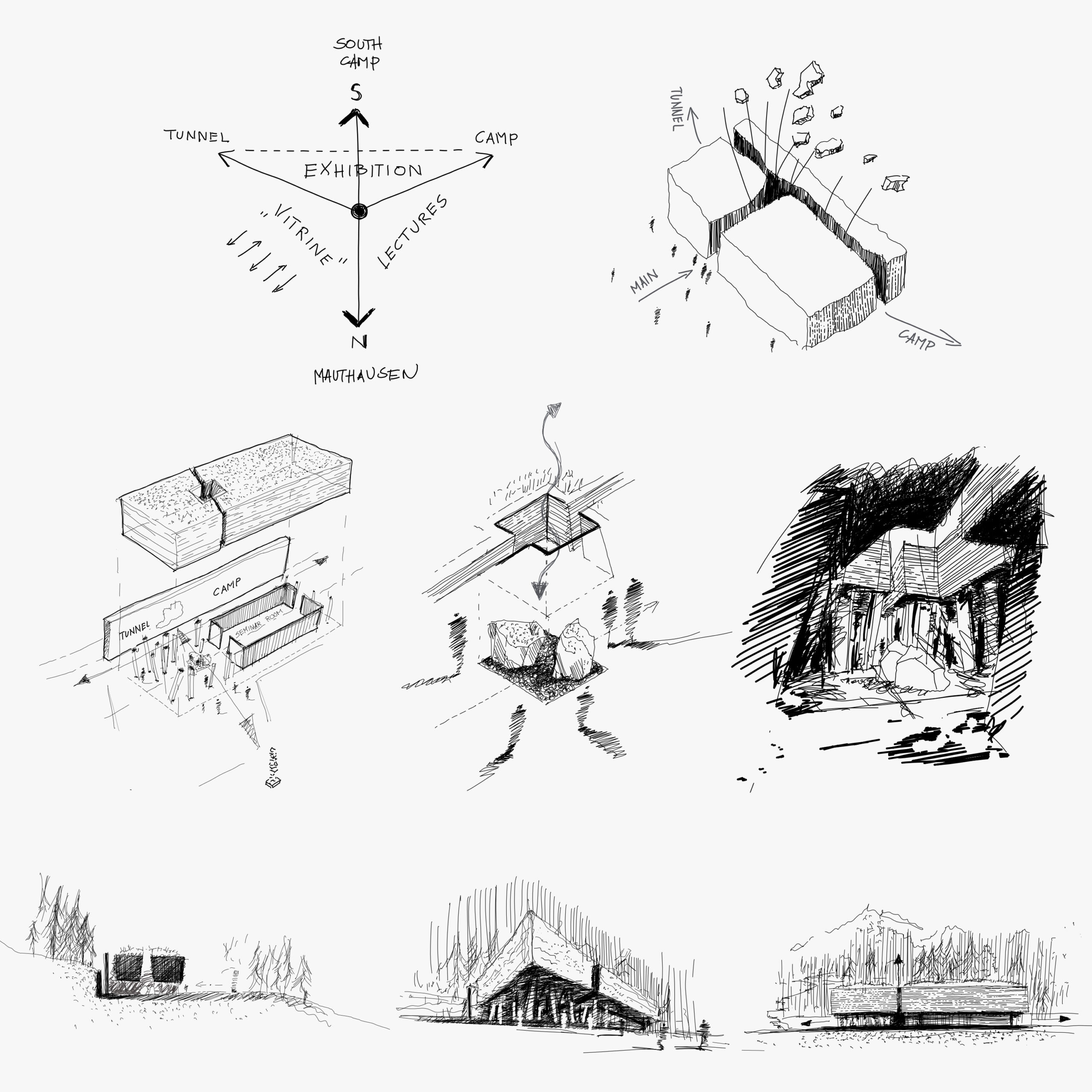
The project concept is based on an interpretation of “Ankommen” (Arrival), not as a single moment, but as a process of confronting history stretched across time and space. Architecture serves as a phenomenological tool, utilizing scale, light, and acoustics to reconstruct a somatic atmosphere of threat and oppression. Functioning as both a gate and a filter, the building becomes a lens through which one must pass to mentally prepare for understanding historical facts before proceeding to the remains of the camp or the tunnel.
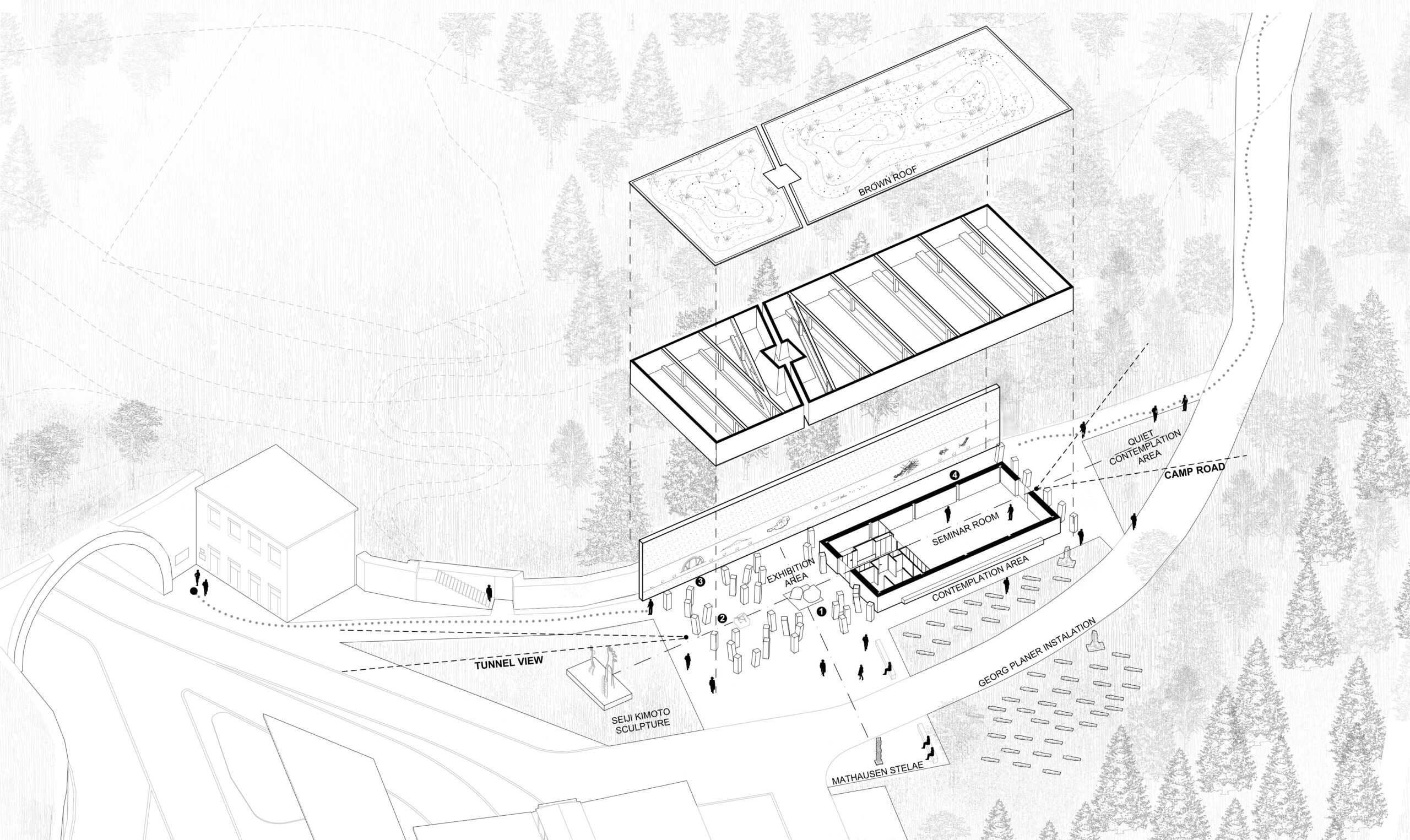
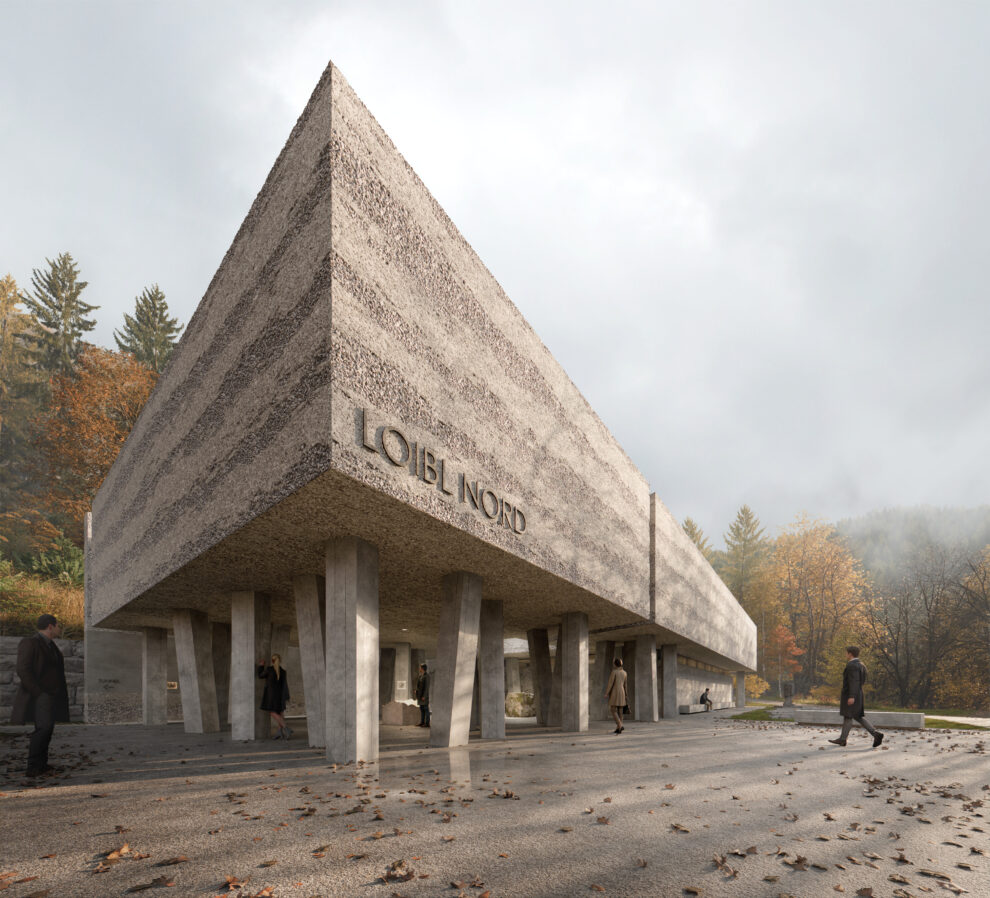
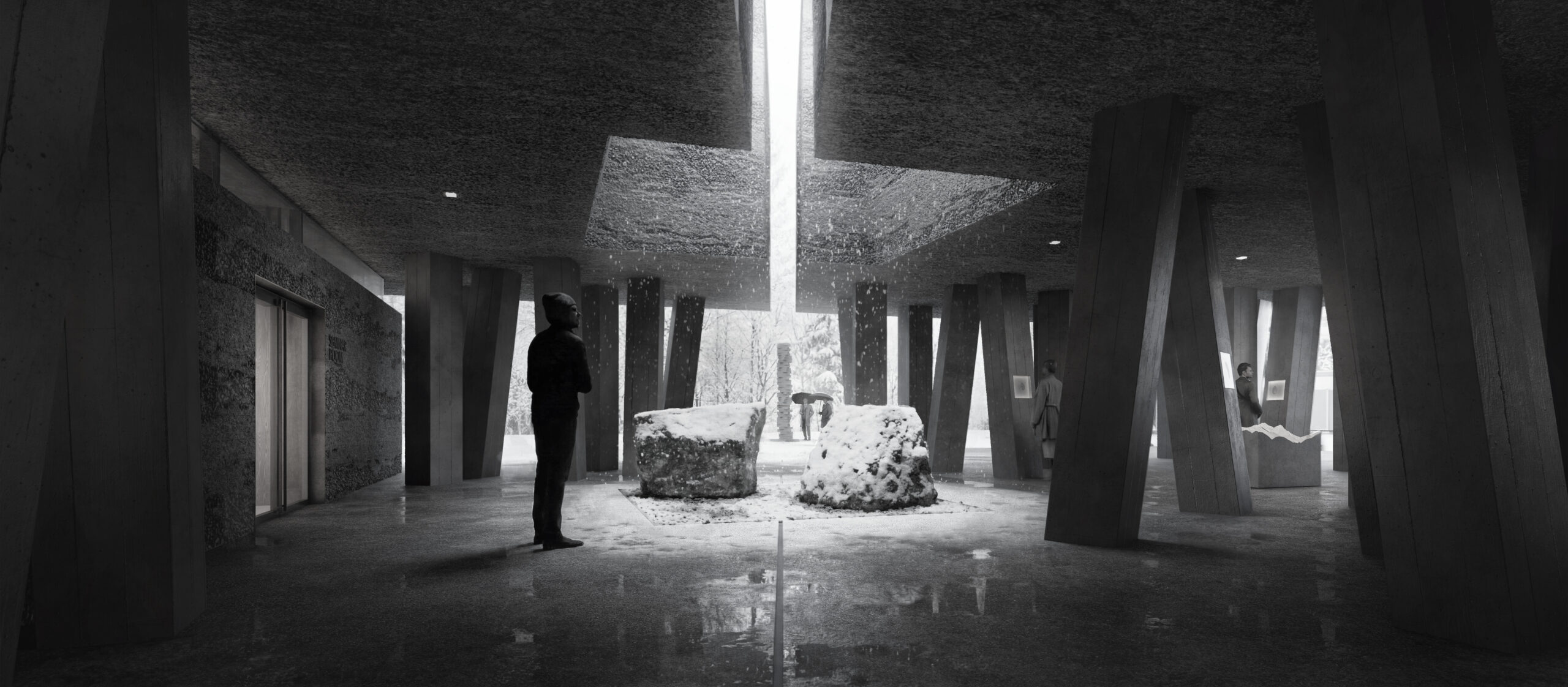
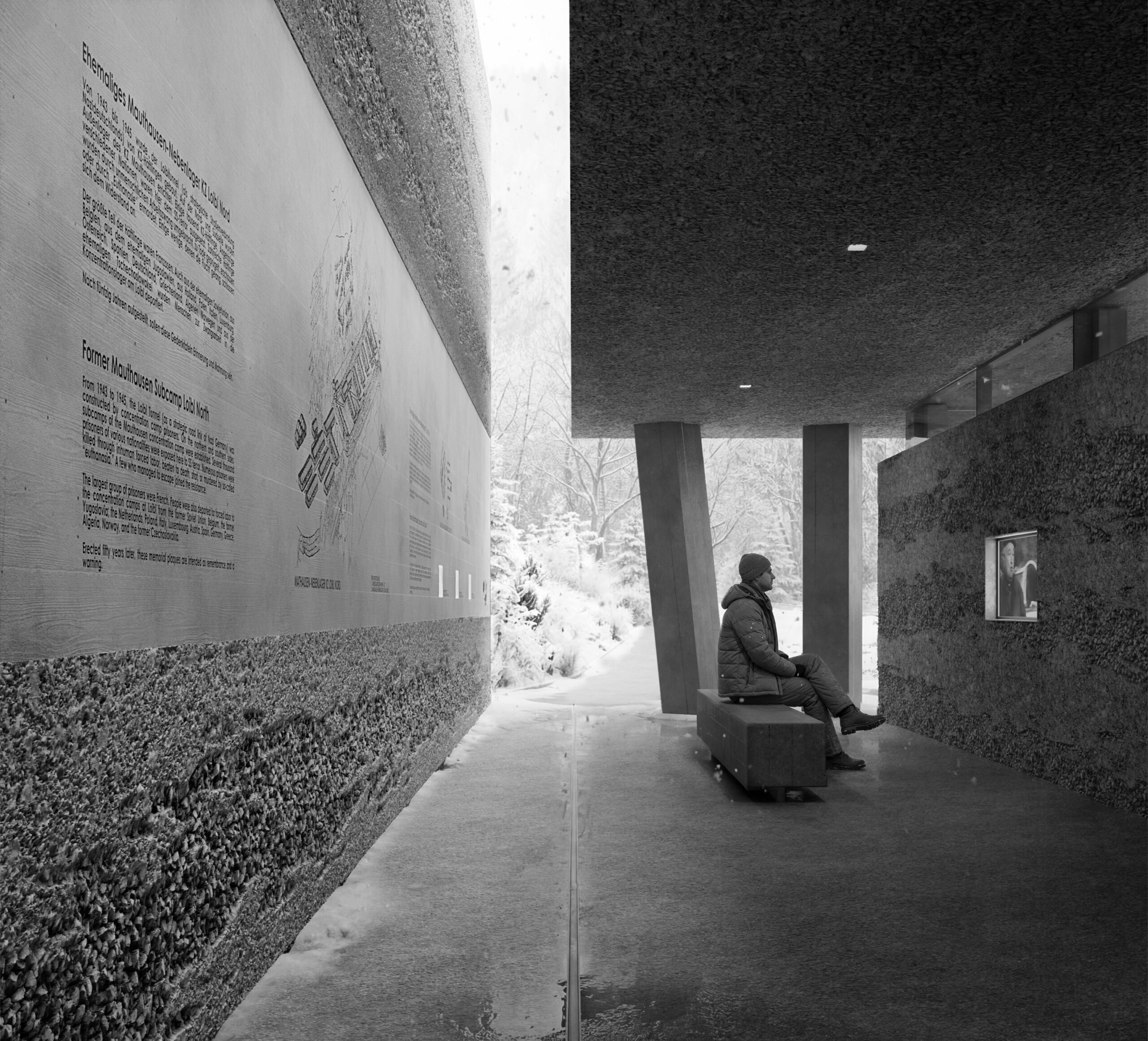
The architectural form has been reduced to two antagonistic forces: weight and resistance, expressed in a massive concrete monolith called the Horizon of Weight. This slab is supported by the Forest of Pillars—an arrangement of forty tilted concrete columns that reference the number of victims and the claustrophobic wooden props used to support the rock during the tunnel’s construction. The chaotic arrangement of the supports is intended to symbolize the prisoner’s plight, forcing a moment of disorientation before finding solace. Running through the center of the building is the North-South Axis of Memory, a physical rift connecting the site with the camp on the Slovenian side and the mother camp in Mauthausen.
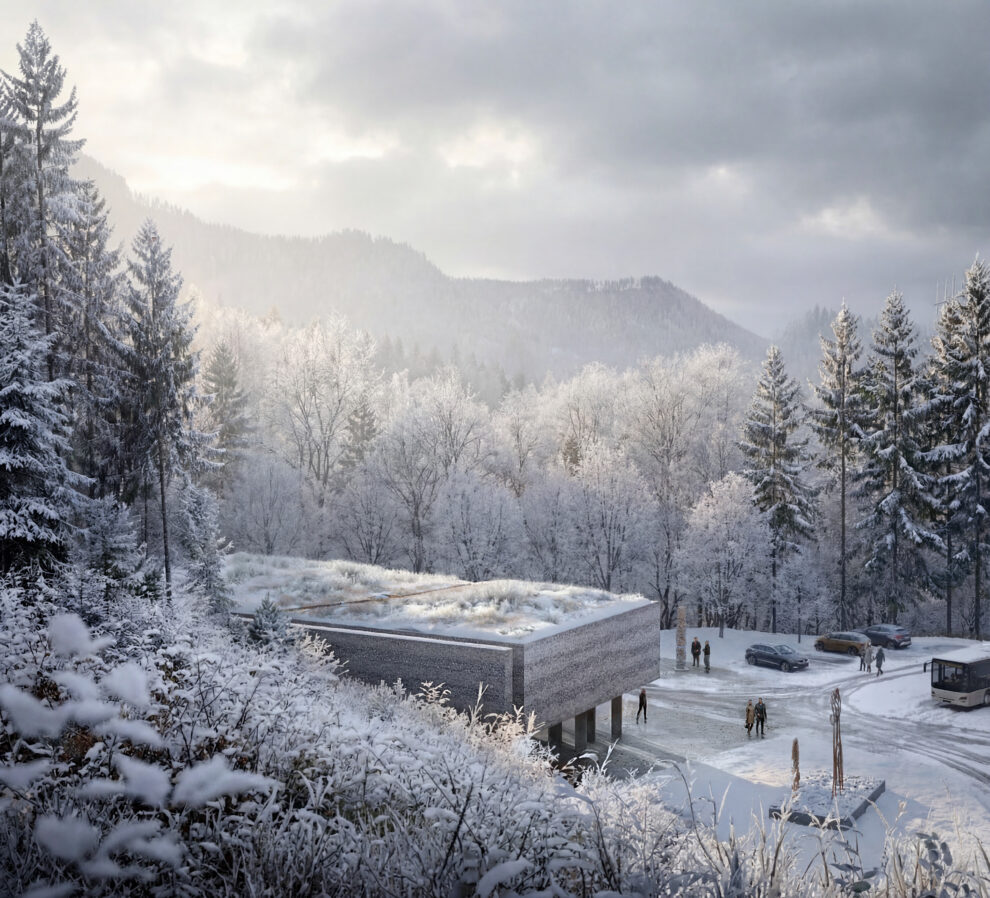
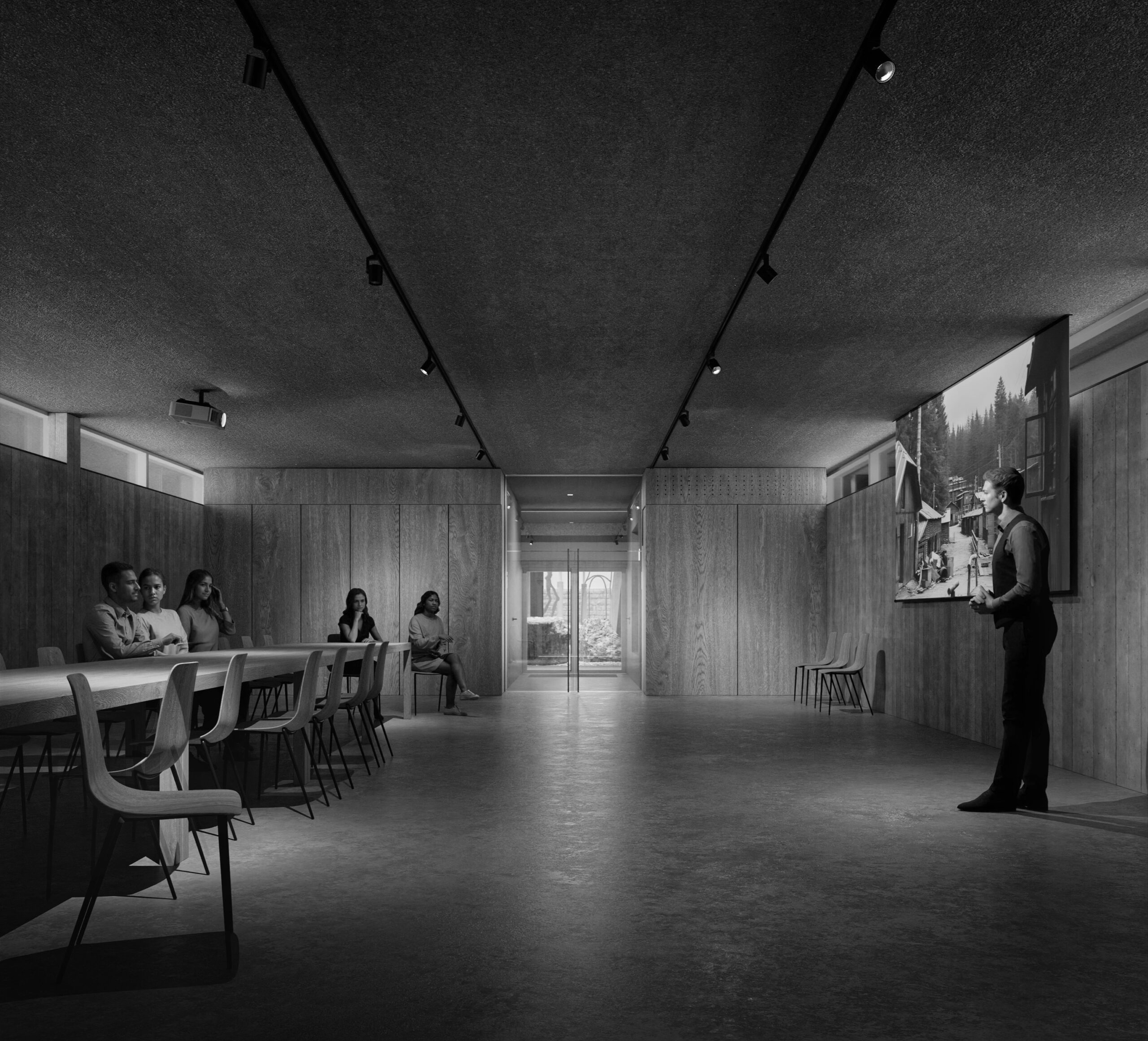
The choice of materials reflects an ethic of austerity, utilizing “geological concrete” with local aggregate, identical to the rock excavated by the prisoners. From the perspective of the upper terrace, the roof functions as a fifth facade—a brown roof covered with a layer of rubble undergoing natural plant succession, serving as a metaphor for a scar and a warning against forgetting. Inside, the visitor experiences a sensory contrast between the cold Sacrum (an open space with an oculus letting in precipitation) and the warm Profanum (a wood-finished seminar room serving as a safe haven). This transition from physical discomfort to intellectual understanding completes the emotional cycle of the visit, leading from initial anxiety to final contemplation.